

As thousands of UK homeowners turn to solar power to cut energy bills and carbon emissions, questions about planning permission often arise. Good news: in most cases, rooftop solar panels count as “permitted development,” meaning you don’t need to apply to your local planning authority. However, there are key limits and conditions you must meet, and certain homes still require consent. This guide walks you through the rules, helps you minimise visual impact, and explains when you’ll need to apply for full planning permission.
What Is Permitted Development?
Under Part 14 of the Town and Country Planning (General Permitted Development) (England) Order 2015, many domestic solar installations are automatically approved. The regulation allows panels and associated equipment on a house or block of flats without making a planning application, so long as you satisfy a set of conditions. The purpose of these conditions is to protect the appearance of buildings and prevent safety issues.
According to the Westmorland & Furness Council guidance, installations are classed as permitted development if:
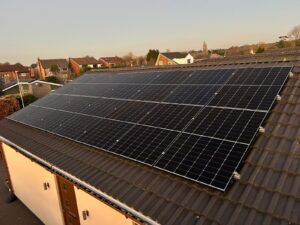
- Panels are not higher than the roof ridge. On a pitched roof, panels must be installed below the highest part of the roof (excluding the chimney).
- Limited protrusion. Panels may project no more than 0.2 m (200 mm) from the roof slope or wall surface. On flat roofs, they cannot stand more than 0.2 m above the plane of the roof.
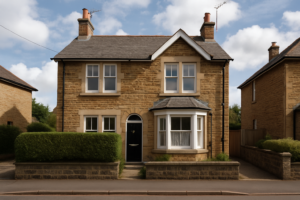
- Conservation areas and listed buildings. Panels must not be fitted to a wall that fronts a highway within a conservation area, and you cannot install panels on listed buildings or within their grounds without consent.
- Minimised visual impact. Equipment should be sited so that it has as little visual impact on the building and the surrounding area as practicable.
- Removal when redundant. Panels and mounting equipment must be removed as soon as they are no longer needed.
These rules apply to most dwellings in England. Wales and Scotland have similar frameworks, but small variations may exist, so always check local guidance.
When Planning Permission Is Needed
If your proposed installation doesn’t meet one or more of the permitted development criteria, you must apply for planning permission. This is likely if:
- Your property is a listed building or within the curtilage of a listed building.
- You live in a conservation area and plan to mount panels on a wall facing a public highway.
- Panels exceed the 200 mm projection or are positioned above the roof ridgeline.
- Ground‑mounted arrays are placed within the curtilage of your house. Free‑standing systems often need permission, particularly if they are large or visible from the road.
In such cases, your installer or architect should prepare plans and submit an application via the planning portal. If you are uncertain whether your project qualifies as permitted development, apply for a Lawful Development Certificate to get official confirmation before starting work. This certificate proves your installation is lawful and can be useful when selling your property.
Visual Impact: How to Minimise it
Even when you meet the technical rules, the visual appearance of a solar installation can affect neighbours and local authorities. Westmorland & Furness Council suggests several ways to reduce visual impact:
- Choose the least visible roof slope. While installers often favour the sunniest roof, consider whether panels can be located on a less visible side while still generating adequate power.
- Even spacing. Arrange panels in a neat, regular pattern and maintain consistent distances from roof margins (ridge, eaves, and party walls).
- Hide behind features. Where possible, place panels behind parapets, chimneys, or other roof features to shield them from view on the street.
- Minimise cabling visibility. Use trunking or run cables under roof tiles, and choose colours that blend with the building’s exterior.
Discuss these points with your installer. A professional should balance optimal sunlight exposure with aesthetic considerations and provide evidence if relocating panels would reduce efficiency.
Roof Type and Structure Considerations
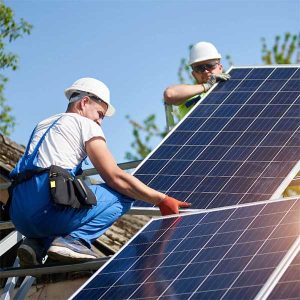
Rooftop solar is lightweight – a typical PV panel adds around 20 kg per square metre – but you still need to ensure the roof can support the additional load. An installer should carry out a structural survey and advise on reinforcement if necessary. Flat roofs may require heavier ballast to secure panels, and the 200 mm height limit refers to the top of the panels rather than any supporting frames. Tilting frames for flat roofs must therefore be low-profile to stay within permitted development.
Conservation Areas, Listed Buildings and Article 4 Directions
Living in a conservation area or a listed building doesn’t automatically prevent you from installing solar panels, but you will need planning permission in most cases. Local authorities assess applications on a case‑by‑case basis and consider the impact on heritage features and streetscape. Some conservation areas are subject to Article 4 Directions, which remove permitted development rights; however, Westmorland & Furness Council notes that none of its Article 4 areas specifically restrict the installation of solar panels. Check with your own council.
For listed buildings, you’ll need both planning permission and listed building consent. The process may require specialist heritage advice and sympathetic panel placement to preserve the building’s character.
Leasehold Properties and Flats
Even if a block of flats benefits from permitted development rights, leaseholders may need consent from the freeholder or management company. Many leases prohibit alterations to external fabric without permission. Engage with your management company early and be prepared to share technical details and risk assessments.
Building Regulations and Installer Accreditation
Planning permission is separate from building regulations. Solar installations must comply with Part P (Electrical Safety) and Part A (Structure) of the Building Regulations. Ensure your installer is certified under the Microgeneration Certification Scheme (MCS) and is a member of a Consumer Code, such as HIES or RECC. Certification is mandatory for claiming Smart Export Guarantee payments from electricity suppliers and will simplify insurance and mortgage processes.
What Happens at the End of Life?
Modern solar panels have lifespans of 25–30 years. Permitted development rules state that when equipment is no longer needed,d it must be removed as soon as reasonably practicable. Panels can be recycled; some manufacturers operate take‑back schemes. Removal often coincides with roof repairs or upgrades.
Next Steps: Planning Your Project
If your project meets permitted development criteria, you can proceed without further permission. Even so, it’s wise to inform your neighbours, particularly if the panels will be visible from their property. You should also:
- Request a structural survey from your installer.
- Obtain a detailed quote and performance estimate.
- Check eligibility for government incentives (e.g., the Smart Export Guarantee).
- Secure freeholder or management consent if you’re a leaseholder.
- Consider future upgrades, such as adding battery storage, EV chargers or heat pumps. Planning may influence panel placement and system sizing.
For more information, consult your local council’s planning department and read the guidance on the Planning Portal. It provides interactive tools and links to find your local authority.
Conclusion
Understanding planning permission is a key step in a successful solar installation. While most rooftop systems fall under permitted development rights, you must adhere to height and projection limits, respect conservation and heritage protections, and minimise visual impact. When in doubt, apply for a lawful development certificate or seek planning permission via the planning portal. Taking these steps ensures your investment is compliant, neighbourly and ready to generate clean, affordable energy for decades.