

Energy bills across the UK have reached a tipping point. For millions of households, the question is no longer whether to act — it’s how to act decisively. Installing home solar panels has moved from an aspirational green gesture to one of the most pragmatic financial decisions a homeowner can make in 2026, and this guide is built around that reality.
What follows is a practical, end-to-end strategy for UK homeowners who are serious about reducing their dependence on the grid. From working out how many panels your property actually needs, to navigating battery storage, installation logistics, and the genuine return on investment — every section is designed to give you the clarity to move forward with confidence.
The energy landscape has changed. Tariffs remain volatile, government support is evolving, and the technology has matured to the point where solar is no longer a niche solution. It is, increasingly, the sensible one.
The State of UK Solar: Why 1.85 Million Homeowners Have Already Switched
Energy bills aren’t just uncomfortable anymore — for millions of UK households, they’ve become genuinely unsustainable. That’s precisely why home solar panels have shifted from a niche environmental statement to a mainstream financial strategy.
The UK has now passed a landmark milestone: 1.85 million certified small-scale solar installations are active across British homes. This isn’t gradual uptake — 2025 was a record-breaking year for the sector, driven by a perfect storm of persistently high energy tariffs, improved panel efficiency, and dramatically reduced installation costs. According to a 2025 report by the Department for Business, Energy & Industrial Strategy, the average cost of solar installation decreased by 18% compared to 2024.
Government policy is accelerating this momentum further. The Warm Homes Plan has positioned solar as a central pillar of the UK’s domestic energy strategy, with targeted funding set to bring installations within reach of lower-income households previously locked out of the market.
Perhaps the most significant shift, however, is psychological. Homeowners are no longer asking “how do I reduce my carbon footprint?” — they’re asking “how do I protect my household from the next price spike?” Energy security, not environmental virtue, has become the primary motivator.
The conversation has moved decisively: solar is now about energy autonomy, not just green credentials.
Understanding that shift puts everything that follows in context — including the first practical question most homeowners ask: how many solar panels are needed to run a home like theirs?
Sizing Your System: How Many Solar Panels Are Needed to Run a Home?
Understanding how many solar panels for house use actually requires starts with one fundamental question: how much energy does your household consume? Getting this right is arguably the most important step in the entire process.
Matching Output to Demand
A typical 3-bedroom semi-detached home in the UK consumes roughly 3,000–4,000 kWh per year. In practice, a 6–8 panel system (generating around 4kW) comfortably covers most of that demand. Larger detached homes with higher occupancy, electric heating, or an EV on the driveway can push annual consumption beyond 6,000 kWh — requiring 12–16 panels and a proportionally larger inverter.
According to the Energy Saving Trust, homes that have switched to solar have seen their annual energy costs reduced by an average of 30%, highlighting the financial incentive for such installations.
The Space vs. Output Trade-Off
Roof space is the real constraint for most homeowners. A standard 400W panel occupies roughly 2m², meaning a 10-panel system needs approximately 20m² of unshaded, south-facing roof. East- or west-facing installations are viable, though output drops by around 15–20%. The cheapest solar install method for constrained roofs is often a hybrid approach — maximising fewer, higher-efficiency panels rather than cramming in low-grade alternatives.
Cabins, Large Homes, and Off-Grid Scenarios
Properties operating partially or fully off-grid face a different calculation entirely. According to The Complete Guide to Off Grid Solar Power Systems for 2026, off-grid households must account for seasonal variation, meaning systems are typically sized 30–50% larger than on-grid equivalents to maintain reliable winter supply.
Why Over-Sizing Is Now Mainstream
Battery storage has fundamentally changed sizing logic. Rather than matching panels precisely to current consumption, forward-thinking homeowners are intentionally over-sizing to capture surplus generation for storage, vehicle charging, and export tariffs. It’s a strategy that pays dividends as demand grows.
This evolving thinking naturally extends to the question of how you install — which is where an exciting shift towards flexible, accessible solutions comes in.
The Kit Revolution: DIY and Plug-In Solar Options
Once you’ve determined roughly how many panels your household needs, the next question is equally important: who installs them, and how? A quiet revolution is underway in how homeowners approach getting solar panels for your home — and it doesn’t always involve a professional crew on your roof.
The Rise of Residential Solar Kits
Home residential solar kits have moved well beyond garden sheds and remote cabins. Today’s all-in-one packages typically bundle panels, cabling, mounting hardware, and a basic inverter into a single purchase. For outbuildings, garages, holiday lets, or smaller properties, these kits offer a genuinely compelling entry point — often at a fraction of the cost of a full professional installation.
The cost-benefit case is straightforward: a modest kit powering a shed or garage workshop might cost between £300–£800, compared with several thousand pounds for a full roof-mounted array. The trade-off is capacity. These systems are best suited to supplementary generation rather than whole-home power.
What the Plug-In Solar Initiative Actually Means
The government’s recent movement towards plug-in solar panels UK regulation represents a significant shift in accessibility. Plug-in solar — sometimes called “balcony solar” — allows homeowners and even renters to connect small solar panels directly to a standard household socket. Under proposed updated guidance, these systems (typically up to 800W) may be installed without notifying your District Network Operator, dramatically lowering the barrier to entry.
The principle is powerful: anyone with a south-facing wall or balcony could begin generating electricity today.
Safety, Compliance, and When to Call a Pro
However, limitations exist and should be taken seriously. DIY kits are appropriate for off-grid applications — sheds, caravans, cabins — where the system operates independently. The moment you’re connecting to your home’s main consumer unit or claiming Smart Export Guarantee payments, an MCS-certified installer becomes a legal and financial necessity. Following the Microgeneration Certification Scheme (MCS) guidelines ensures safety and compliance.
Cutting corners on grid-tied installations can void home insurance and create genuine safety risks. Know where the line is.
Of course, generating solar energy is only half the equation. Once you’re producing electricity, the question of what to do with the surplus — especially after dark — becomes critical, which is precisely where battery storage changes everything.
Why Panels Aren’t Enough: The 122% Surge in Battery Storage
Generating solar energy is only half the equation. Without somewhere to store it, much of what your panels produce during daylight hours simply flows back to the grid — often at a rate far less favourable than what you pay to import electricity in the evening. That imbalance is precisely why battery storage has become the defining upgrade for anyone serious about solar for home energy autonomy in 2026.
The Sell-Back Trap
Export tariffs under schemes like the Smart Export Guarantee (SEG) typically pay between 4p and 15p per kWh — while many households pay 24p–30p per kWh to import during peak evening hours. Storing surplus energy rather than exporting it can effectively triple its financial value. The maths are difficult to argue with.
A Market in Rapid Expansion
This logic isn’t lost on homeowners. Battery Energy Storage System (BESS) adoption has surged by 122% as households recognise that panels alone leave money — and resilience — on the table. Geopolitical uncertainty and volatile energy markets have further accelerated this shift, with price arbitrage during peak tariff hours now a core part of most solar investment strategies.
Retrofitting: No Need to Start Over
Crucially, you don’t need a brand-new installation to benefit. Most modern battery systems can be retrofitted to an existing solar array, provided your inverter is compatible. A hybrid inverter upgrade is sometimes required, but the overall cost remains significantly lower than a full system replacement.
The ROI Case
In practice, a well-sized battery can reduce grid dependence by 70–90% for an average household. The payback period for battery additions typically runs four to seven years — improving steadily as tariffs rise.
With the storage question answered, the next consideration is equally practical: how does the physical installation actually unfold, and what should you expect before work begins?
Installation Logistics: What to Expect on Site
Understanding how solar panels work is one thing — getting them onto your roof is another matter entirely. The practical reality of installation often surprises homeowners, particularly when it comes to the gap between paperwork and physical progress.
The Timeline Reality
The actual physical installation typically takes just one to three days for a standard residential system. However, the administrative groundwork — grid connection applications, DNO (Distribution Network Operator) notifications, scaffolding bookings, and surveyor sign-offs — routinely adds two to six weeks before a single panel goes up. Planning ahead matters enormously here. Booking an installer in spring for a summer installation is a common pattern that avoids the seasonal rush.
Is Your Roof Ready?
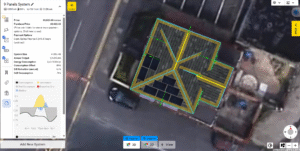
Not every roof is equally suited to solar. A south-facing pitch between 30° and 45° delivers optimal generation, though east- and west-facing orientations remain viable with modest output reductions. Shading from chimneys, trees, or neighbouring buildings can significantly undercut performance — a partial shadow across even one panel can drag down the whole array without microinverters or power optimisers in place. Structural integrity is equally critical; an installer should assess your roof’s load-bearing capacity before committing to a layout.
Permitted Development and Planning Permission
Most residential solar installations fall under Permitted Development rights, meaning no formal planning application is required. However, listed buildings, properties within conservation areas, and certain flat-roof configurations are notable exceptions where local authority approval becomes necessary.
Insurance-Backed Guarantees
One caveat that’s easy to overlook: always insist on an Insurance-Backed Guarantee (IBG) from your installer. If the company ceases trading before your 25-year panel warranty expires, an IBG ensures your cover remains intact.
With the logistics understood, the bigger question becomes whether the overall financial case still stacks up — and that’s precisely what deserves a closer look next.
The Bottom Line: Is Solar Still Worth It in 2026?
The financial case for solar has fundamentally shifted. Where the old Feed-in Tariff model rewarded homeowners for exporting surplus energy back to the grid, the 2026 strategy centres on self-consumption — using as much of what you generate as possible, cutting your exposure to volatile energy bills rather than chasing export payments. That shift changes everything about how you calculate your return on investment.
On the property side, the evidence is compelling. Solar installations are increasingly recognised as a tangible asset that improves resale value, with energy-efficient homes commanding stronger interest in a market where running costs matter more than ever to buyers.
The “wait for better tech” argument doesn’t hold up financially. Panel efficiency has improved incrementally, but rising energy bills mean every month without solar is money spent that a system would otherwise have offset. Delaying a five-year payback by two years of waiting simply extends the timeline further.
Your Next Practical Step
Start with your roof. Assess orientation, shading, and available square meterage before any other decision. From there, the choice between home residential solar kits — which suit confident DIY installers or smaller properties — and a fully managed professional installation comes down to your budget, roof complexity, and appetite for project management.
Solar in 2026 isn’t a gamble on future technology. It’s a proven, costed route to genuine energy autonomy. The only question worth asking now is: what’s stopping you from starting?
Key Takeaways
- 1.85 million certified small-scale solar installations
- “how do I protect my household from the next price spike?”
- Battery storage has fundamentally changed sizing logic.
- Storing surplus energy rather than exporting it can effectively triple its financial value.
- Insurance-Backed Guarantee (IBG)