

The New Economics of Home Solar: Beyond the Green Hype
Forget the eco-warrior narrative for a moment. The most compelling reason to install solar panels for home use in 2025 isn’t about saving the planet — it’s about protecting your finances from an energy market that has repeatedly proven it cannot be trusted to stay affordable.
UK household electricity prices have swung dramatically over the past four years, leaving homeowners exposed and frustrated. Solar changes that equation fundamentally. Rather than a green gesture, it’s increasingly understood as energy price hedging — locking in your own generation capacity before the next price spike arrives.
What’s shifted in 2025 is the framing. Solar is no longer just a utility upgrade; it’s a property asset — something that sits on your balance sheet, adds to your home’s value, and compounds returns over time.
The Government’s Warm Homes Plan also signals a clear policy direction: subsidised and incentivised installations are coming, but early movers will avoid the inevitable surge in demand and installation backlogs.
One practical consideration that surprises many homeowners is how many solar panels are needed to run a home effectively — and the answer depends far more on your usage habits than on your roof size.
The financial case deserves proper scrutiny. Next, we’ll examine exactly what the returns look like.
The ROI Reality: Property Value and Long-Term Savings
The economics discussed in the previous section don’t stop at your electricity bill. Installing solar panels for house use delivers a compounding financial return that stretches well beyond monthly savings — and that’s before you consider what happens when you eventually sell.
The Property Value Premium
Research consistently shows that solar installations can significantly enhance a property’s resale value. According to a study by the Energy Saving Trust, homes with solar panels often see an increase in value. On an average UK home valued at £285,000, this could translate to a notable increase in equity, making solar one of the most lucrative home improvements available. Unlike a new kitchen, which depreciates the moment it’s installed, solar’s perceived value can increase as energy prices rise.
Annual Savings: What UK Households Can Realistically Expect
UK homeowners typically save between £500 and £700 annually on energy bills after installation — though this varies considerably depending on system size, household consumption, and local grid tariffs. Over a 25-year panel lifespan, that’s a cumulative saving of £12,500 to £17,500 at today’s rates. Factor in projected energy price increases, and the real-terms figure grows substantially.
Solar’s true financial power lies in compounding: every year energy prices rise, the value of your self-generated electricity rises with them.
Protecting the Investment with IBGs
One often-overlooked element is the Insurance-Backed Guarantee (IBG). Reputable installers offer these as a safeguard, ensuring your warranty remains valid even if the installation company ceases trading — a genuine risk in a fast-moving market.
Understanding what your system is worth financially sets the stage for the next critical question: how many panels do you actually need to maximise that return?
Sizing Your System: How Many Solar Panels Are Needed to Run a Home?
Once you’ve established that solar stacks up financially — and the previous sections make a compelling case that it does — the next practical question is deceptively simple: how many panels do you actually need?
The Benchmark Home: Translating Square Footage into Panel Count
A frequently cited reference point is the typical UK family home, which is around 1,500 sq ft. According to the Energy Saving Trust, a typical household consuming around 3,800 kWh annually will generally require a system in the 3–4 kW range — roughly translating to 10–16 panels, depending on their wattage. This requires a meaningful amount of roof space, typically 20–30 square metres.
What Shifts the Number?
Several variables pull that figure up or down considerably:
Roof orientation and pitch — Your roof’s direction and angle directly affect how much energy your system produces. In the UK, a south-facing roof at 30–40° delivers the best results, capturing consistent sunlight throughout the day. East and west-facing systems still perform well but generate more in the morning or afternoon rather than evenly, which can slightly reduce total output.
Family size and lifestyle — Energy use depends more on behaviour than headcount. Homes running multiple appliances daily — showers, washing, cooking, and home working — will see much higher demand than quieter households. Understanding when and how energy is used is just as important as how much is used when sizing a system.
EV charging — Adding an electric vehicle can increase electricity demand by 30–50%. This often means a larger solar system is needed to offset the extra load, typically requiring a few additional panels. Charging during the day, when solar is generating, can significantly improve savings.
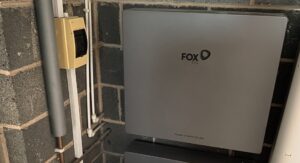
Battery storage — A battery allows you to store unused daytime energy and use it later, rather than exporting it to the grid. This can increase how much of your own energy you use from around 30–40% to as much as 70–90%. Most homes suit a 5–10 kWh battery, with larger systems making sense for higher usage or EV owners.
The Over-Sizing Trap
The assumption that bigger is always better with home solar panels is one of the most common — and costly — mistakes homeowners make. An over-sized system without battery storage simply exports surplus electricity to the grid at relatively low export rates. That surplus generation rarely earns back its installation cost premium, quietly undermining your ROI.
Where Battery Storage Changes the Equation
Battery storage is the variable that makes panel count decisions genuinely strategic. Rather than exporting cheaply, a well-matched battery captures daytime generation for evening use — the period when most UK households draw the heaviest demand. Getting the balance right between panel capacity and storage is worth exploring in more depth, and it dovetails neatly into a broader question many homeowners are now asking: should they do any of this installation work themselves?
DIY Solar Kits vs. Professional Installation: Navigating the Middle Ground
Now that you have a clearer picture of system sizing, the next question many homeowners face is deceptively simple: Do you need a professional installer at all? The short answer is nuanced — and getting it wrong can be costly.
The Rise of Plug-In Solar in the UK
One of the most significant shifts in 2025 has been the growing accessibility of plug-in solar units, sometimes called “balcony solar” or “micro-inverter kits.” These are compact, relatively affordable systems designed for minimal installation effort. The UK government has been actively working to reduce regulatory barriers to these devices, making it easier for households to adopt small-scale generation without having to navigate the full planning permission process.
Where DIY Kits Make Sense
For solar panels for your home that are off-grid or supplementary — think garden sheds, detached garages, and flat-roofed outbuildings — a DIY kit can represent genuine value. The advantages are clear:
Lower upfront cost, often £300–£800 for a basic setup
No scaffolding or specialist labour required
Ideal for powering low-draw appliances, lighting, or EV charging top-ups
However, the limitations are equally real. DIY kits typically produce modest output, and their performance in a main dwelling rarely replaces that of a professionally sized system. They suit supplementary use far better than primary energy generation.
Why Professional Installation Remains Non-Negotiable for Grid-Tied Systems
Grid-connected systems are where DIY enthusiasm must give way to professional certification. In the UK, any installation connecting to the grid must comply with Part P electrical regulations and ideally be completed by an MCS-certified installer — a requirement for accessing the Smart Export Guarantee and most warranty protections. Improper wiring on a grid-tied system creates genuine fire and electrocution risks, and insurers may void home cover if uncertified work is discovered.
In practice, the sensible middle ground is this: use a DIY kit for outbuildings and low-stakes applications, but invest in professional installation for your main home. Before committing either way, there are a few hard-won lessons from those who’ve already been through the process, which is exactly what the next section covers.
What I Wish I’d Known Before Installing Solar: The Veteran’s Checklist
Choosing solar for home use is rarely as straightforward as the brochures suggest. The finances stack up, the technology is proven, and the installation process — whether DIY-assisted or fully professional — is well-trodden. But there are a handful of practical realities that consistently catch homeowners off guard. Consider this a candid debrief from those who’ve already been through it.
The Maintenance Reality (and the Inverter Truth)
Solar panels are often marketed as “fit and forget,” but in reality, a small amount of upkeep goes a long way. While rainfall in the UK does remove a fair amount of surface dirt, it’s not always enough to maintain optimal performance — especially in areas with dust, pollen, bird droppings, or nearby trees. A professional clean once a year is typically recommended to keep the system operating efficiently, and many homeowners now opt for ongoing maintenance coverage to ensure performance is consistently monitored and maintained without having to think about it.
What’s far more likely to require attention, however, is your inverter — the component that converts DC electricity from the panels into usable AC power for your home. Inverters typically carry warranties of 5–12 years, considerably shorter than the 25-year performance guarantees common on panels themselves. Planning for a replacement partway through the system’s lifespan isn’t pessimistic — it’s smart, realistic budgeting, and often overlooked when calculating long-term returns.
The Shading Problem Nobody Warns You About
Shading is deceptively damaging to solar output. A single shadow — from a chimney, a neighbouring rooftop extension, or a tree that’s grown considerably since your survey — can disproportionately reduce generation across an entire string of panels. What typically happens is that a partial shadow on one panel drags down the output of others connected in series.
A thorough shading analysis at the survey stage, covering different times of day and across seasons, is non-negotiable. Ask your installer specifically how they’ve accounted for it.
Navigating the DNO and Export Tariffs
Once your system is live, you’ll likely need to notify your Distribution Network Operator (DNO) — the regional body managing the electricity grid infrastructure. Larger systems may require formal approval before connection.
On the upside, registering for the Smart Export Guarantee means you’re paid for surplus electricity exported to the grid. Rates vary significantly between suppliers, so comparing tariffs is worthwhile.
With these practicalities in mind, the final question becomes: how do you actually shop for solar without feeling overwhelmed?
Next Steps: How to Shop for Solar Without the Stress
The preceding sections have mapped out everything from system sizing to the veteran’s checklist — now it’s time to translate that knowledge into confident action.
Get Multiple Quotes and Compare Properly
Never accept the first quote you receive. Request at least three proposals, ensuring each covers the same system specifications so comparisons are meaningful. Look beyond headline price — scrutinise panel efficiency ratings, warranty terms, inverter type, and projected annual output.
Verify Credentials Before Signing Anything
Any installer fitting home residential solar kits or full roof systems in the UK should hold MCS (Microgeneration Certification Scheme) accreditation — without it, you’ll lose eligibility for the Smart Export Guarantee. Equally important is IBG (Insurance-Backed Guarantee) coverage, which protects your installation if the company ceases trading.
The Golden Thread, Summarised
Three principles run through every section of this guide:
Size correctly — match your system to actual consumption
Protect your investment — insist on certified installers and robust warranties
Think long-term — payback periods, export tariffs, and rising energy costs all favour patience
The homeowners who get the most from solar aren’t simply those who install it — they’re the ones who plan it properly.
Take your time, ask the right questions, and you’ll find solar genuinely delivers on its promise.