
Choosing a solar system can feel overwhelming. Flux Solar Energy is here to make it easy. As a member of the Renewable Energy Consumer Code (RECC), we follow strict consumer‑protection standards and only install equipment that meets the Microgeneration Certification Scheme (MCS). This guide answers some of the most searched homeowner questions—like “How many panels do I need?” and “Do I need a battery?”—and introduces the major brands and systems we can install for you.
What solar system suits my home?
The “right” solar setup depends on your roof, your energy use and your budget. Here are answers to the questions our team gets asked the most:
How many panels will I need?
Most homes use between 3.5 kW and 4.8 kW of solar capacity. That translates to roughly 6–12 panels and requires about 10–20 m² of roof space. These figures come from the Energy Saving Trust’s solar panel guide, which notes that a 3.5 kWp system typically uses six to twelve panels and covers ten to twenty square metres of roof. To estimate your size, divide your annual electricity consumption (in kWh) by the expected output of a single panel (for example, a 400 W panel produces around 400 kWh per year under UK conditions).
Does roof orientation matter?
Solar panels produce the most energy on an unshaded, south‑facing roof. According to the Energy Saving Trust, east‑ or west‑facing roofs still work well, but they may generate 15–20 % less electricity than a south‑facing array. North‑facing roofs are usually unsuitable unless you use highly efficient panels or adjust the tilt. If shading is an issue—such as from chimneys or trees—microinverters or optimisers can reduce losses by allowing each panel to operate independently.
What if my roof is flat or space is limited?
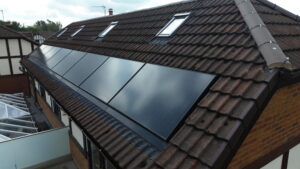
Flat roofs can accommodate solar arrays mounted on angled frames. If your roof is irregular, has dormers or you want a sleek finish, integrated solar tiles or in‑roof mounting kits can replace sections of the roof covering. These systems sit flush with the roof, making them ideal for conservation areas or for homeowners seeking minimal visual impact. The Energy Saving Trust’s guide to solar roof tiles notes that integrated solutions generally cost about 1.5 times more than a standard panel installation and produce roughly 80 % of the electricity per square metre compared with traditional panels. They are best for projects where aesthetics and planning considerations outweigh raw energy yield.
Do I need a battery?
Battery storage isn’t essential, but it helps you use more of your solar energy. Without a battery, any excess electricity is exported to the grid (you’ll receive a small payment through the Smart Export Guarantee). With a battery you can store surplus power during the day and use it in the evening, reducing grid use and protecting yourself from power cuts. Batteries come in various sizes from 5 kWh (enough for basic evening loads) up to 13.5 kWh per unit; multiple units can be combined for larger homes and small businesses. They also open the door to time‑of‑use tariffs, letting you charge from the grid at low prices and discharge when rates are higher.
Will I need planning permission?
In most cases, planning permission isn’t required for roof‑mounted solar panels in England. The Energy Saving Trust explains that panels are considered “permitted development”, but there are exceptions—such as listed buildings, conservation areas or systems that protrude significantly from the roof—so it’s always worth checking with your local planning office. Flux handles all local authority queries and the necessary Distribution Network Operator (DNO) registration, so you don’t need to worry about paperwork.
Our equipment range
Flux can fit almost any MCS‑certified product on the market. Below is a selection of the batteries, inverters and mounting systems we install most often. We always match technology to your needs and design a system that balances performance, aesthetics and cost.
Battery storage
- Tesla Powerwall 3 – Stores 13.5 kWh per unit; up to 94.5 kWh when stacked. Handles high starting currents and includes a 10‑year warranty. Suitable for homeowners who want robust backup power and smart energy management.
- Fox ESS – A Sino‑British brand offering locally supported systems. Fox leads the UK residential market and manufactures Tier 1 energy storage with modular designs. Models like the ECS and EP ranges fall into MCS Class 2 when paired with Fox inverters.
- GivEnergy and SolarEdge – British‑designed GivEnergy batteries and SolarEdge’s DC‑coupled storage integrate seamlessly with their inverters. Capacities range from 5 kWh to 20 kWh and support whole‑house backup and dynamic tariff switching.
- Huawei LUNA and Enphase IQ Battery – Huawei’s LUNA series and Enphase’s modular IQ Battery systems offer flexible expansion and integrated monitoring apps. They are MCS‑certified and compatible with smart home technologies.
More on batteries: If you’d like to understand how batteries and other smart devices can work together to support the grid and earn you money, check out our virtual power plant guide.
Inverters and microinverters
- Enphase IQ series – Each panel has its own microinverter, improving performance when roofs face different directions or have partial shading. Enphase microinverters are software‑defined, receiving automatic updates to meet changing grid requirements and offer a 25‑year warranty.
- Solis hybrid and string inverters – Cost‑effective for medium to large arrays. Solis inverters provide efficiencies up to 99 % and support both AC‑ and DC‑coupled batteries. Sizes range from 0.7 kW to 20 kW and include remote monitoring features.
- SolarEdge and SMA – Optimised DC‑to‑AC conversion with panel‑level monitoring. SolarEdge systems use power optimisers to maximise yield, while Germany’s SMA offers robust string inverters known for reliability and long warranties.
- Huawei inverters – Hybrid models from Huawei include integrated energy‑storage controllers and AI‑based energy management, making them a good choice for homes planning future battery additions.
Roof mounting systems
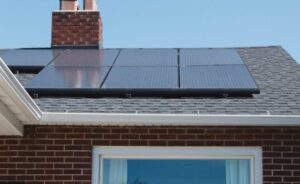
- On‑roof (above‑roof) kits – The most common option for domestic properties. Panels are attached to rails that sit above your existing roof tiles, allowing airflow underneath to keep them cool and easy removal for maintenance.
- GSE in‑roof kit – A popular integrated system that replaces roof tiles. It installs quickly (10–16 panels in roughly six hours) and offers a clean, flush appearance. The system is universal (portrait or landscape layouts) and compatible with roof windows.
- Solar roof tiles – Tiles with integrated solar cells for a seamless look. They’re perfect for complex roof shapes or heritage areas but cost about 1.5 times more and produce roughly 80 % of the power per square metre compared with standard panels. For the highest performance, ensure both the tiles and the installer are MCS‑certified.
- Flat‑roof systems and ground mounts – Tilted frames can be installed on flat roofs or in gardens. These systems allow for optimal orientation and maintenance access, but they do require more structural analysis and planning.
External vs internal equipment
- External components – These include roof‑mounted panels or tiles, mounting rails, microinverters and any exterior isolators. For commercial projects we offer weather‑proof enclosures for batteries and inverters.
- Internal components – Batteries, hybrid inverters and control equipment are installed inside your property, typically in a utility room or garage. Our installers ensure all cabling is neat and easily accessible for servicing.
Why choose Flux?
Flux Solar Energy is a RECC‑approved installer, which means we follow a strict consumer code covering everything from clear pre‑sales information to deposit protection and workmanship warranties. Our team of MCS‑accredited engineers designs systems around your goals—whether you want to slash your bills, increase your home’s energy independence or power a business with clean electricity. We handle surveys, DNO paperwork and installation, and we’ll show you how to monitor your system via a smartphone app. With access to the industry’s top brands and the flexibility to fit any MCS‑compliant product, we can tailor an elegant on‑roof array, a sleek in‑roof system or a high‑capacity storage solution.
Ready to go solar?
If you’re ready to explore solar options or need advice on batteries and inverters, get in touch with Flux Solar Energy. We’ll help you decide which system best suits your home or business and provide a detailed, transparent quotation. With our RECC membership and commitment to quality, you can be confident that your project is in safe hands.
Further reading:
• To learn more about the consumer protection standards we follow and the QANW workmanship warranty we provide, see our RECC and QANW guide.
• For business owners, our commercial solar guide explores how rooftop arrays can slash energy bills for warehouses and large premises.