A new era of community‑powered energy (virtual power plants)
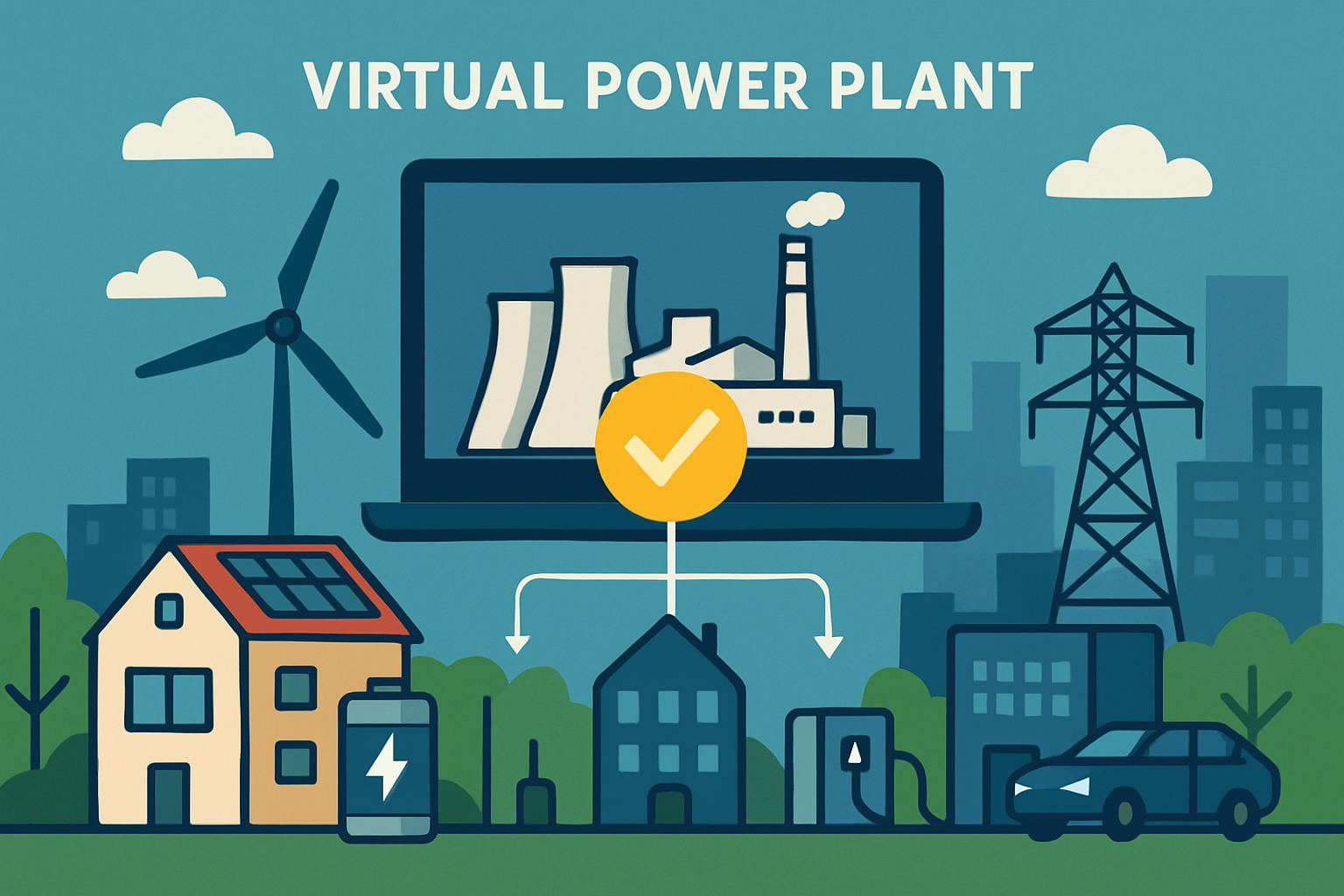
When most people think of a power plant, they imagine a large station with smokestacks or cooling towers. Virtual power plants (VPPs) turn that image on its head. Instead of one huge generator, a VPP links together hundreds or even thousands of small devices—solar panels, home batteries, electric vehicles (EVs) and smart appliances—and coordinates them so they can work like a single power plant. These devices are called distributed energy resources (DERs).

In the United States, independent think‑tank RMI explains that VPPs already aggregate DERs such as batteries, EVs, smart thermostats and hot‑water heaters to provide benefits to households, businesses and the wider grid. By coordinating many small resources, VPPs can help keep the grid balanced, reduce costs and accelerate the transition to clean energy. In the UK, this idea is taking off too, thanks to programmes like the Demand Flexibility Service and commercial aggregators. Below, we explain what VPPs are, how they work for homes and businesses, and why now is a perfect time to get involved.
What are virtual power plants?
A virtual power plant isn’t a physical building. It’s a digital platform that connects and manages a network of DERs to deliver grid‑level services. Each participating device can shift when it uses electricity or when it exports stored energy back to the grid. When thousands of devices respond together, the aggregated effect is similar to a small power station: demand can be lowered during peak hours, and excess electricity can be supplied when needed. According to RMI, VPPs advance several key objectives:
- Reliability and resilience – By 2030, well‑managed VPPs could reduce peak demand by about 60 GW (in the US), with potential to reach over 200 GW by 2050. Though these numbers are from the US market, they illustrate the scale that aggregated DERs can achieve.
- Affordability – VPPs lower the overall cost of electricity by deferring expensive grid upgrades and reducing the need for fuel‑hungry “peaker” plants. RMI estimates VPPs could cut annual power‑sector expenditures by $17 billion in 2030.
- Decarbonisation and electrification – Coordinated DERs reduce reliance on fossil‑fuel power stations, encourage more renewable generation and make economy‑wide electrification easier.
- Consumer empowerment and equity – Participants earn revenue or credits for helping the grid, and VPPs reduce pollution from peaking plants that tend to be located in low‑income neighbourhoods.
How do virtual power plants work in the UK?
The UK’s electricity system is overseen by the National Energy System Operator (NESO). After energy prices spiked in 2022, NESO launched the Demand Flexibility Service (DFS). This programme rewards households and businesses for reducing electricity use during evening peak periods. According to NESO’s own description, the DFS pays participants for using less power or shifting their usage to off‑peak times via their supplier. The service began in winter 2022/23 to reduce the need for expensive peaking generation. By making it easy for homes and businesses to join the flexibility market, the DFS has won industry awards for innovation.
An Energy Saving Trust article notes that the DFS has grown rapidly: over 2.6 million homes and businesses have taken part, saving around 7,000 MWh of electricity during peak events—enough to light 54,000 homes for a year. Each event lasts about an hour in the evening, and participants receive cash or points on their energy bill for every kilowatt‑hour they avoid using. From November 2024, the scheme expanded to run year‑round. The Energy Advice Hub reports that over the first two winters, 4.2 million participants helped save over 7 GWh, reducing the need for costly infrastructure and cutting carbon by avoiding gas- and diesel-fired peaking plants. NESO’s latest consultation aims to evolve the service so events can be called on shorter notice and participants can “stack” DFS revenue with other flexibility markets.
Commercial VPP programmes
Beyond the DFS, there are growing opportunities for businesses to join aggregated flexibility schemes. The Energy Advice Hub explains that commercial properties can participate if they have half‑hourly metering and can shift or reduce load for at least 30 minutes when requested. Businesses can sign up directly with NESO if they can deliver more than 1 MW of flexibility, or they can enrol through their energy supplier or a third‑party aggregator. Payments depend on how much capacity you can offer and prevailing market rates. Aggregators pool flexibility from numerous customers and bid it into markets such as Dynamic Frequency Response or the Capacity Market. This provides an additional revenue stream while also supporting grid stability.
One high‑profile example is a project where around 20,000 devices, including home batteries, EVs and heat pumps, have been aggregated to provide 134 MW of controllable capacity to the grid. Another project, managed by a major UK utility, connected 100 domestic batteries to deliver Dynamic Firm Frequency Response, allowing households to maximise their solar generation, lower bills and support grid stability. These projects show that VPP technology is moving from pilot trials to real‑world operations.
Residential opportunities
For households, participating in a VPP is increasingly accessible:
- Smart meters and apps – You’ll need a smart meter so your energy supplier can measure how much electricity you use and pay you accordingly. Many suppliers provide notifications through an app or text message when a flexibility event is scheduled.
- Battery storage and solar – Installing a home battery and solar panels allows you to store cheap or renewable electricity and use it when prices are high. During an event, you can draw power from your battery instead of the grid. Our recent blog on adding a battery to your system explains how battery storage can increase self‑consumption and reduce bills.
- Electric vehicles – EV charging is one of the easiest loads to shift. Simply delaying charging to off‑peak hours can earn you rewards. Future “vehicle‑to‑grid” technology could even let your EV supply electricity back during a peak. A pilot project funded by Innovate UK used EVs alone to create a VPP, illustrating the technology’s potential.
- Heat pumps and smart appliances – Smart thermostats, heat pumps, and hot‑water tanks can pre‑heat your home or water before an event, then reduce consumption during peak periods without compromising comfort.
Households in England, Scotland and Wales can participate; the service isn’t currently available in Northern Ireland. You can only join through one registered provider, so check with your energy supplier or an approved aggregator.
Why virtual power plants matter for businesses
Commercial buildings – offices, factories, warehouses and supermarkets – often have significant flexibility in when they use electricity. By adjusting HVAC systems, refrigeration or industrial processes for short periods, they can earn substantial payments. Participation also demonstrates commitment to sustainability and can support corporate net‑zero goals. The DFS has already reduced the need for additional peaking plants, saving public money and reducing emissions. For businesses with solar generation and battery storage, VPP participation increases the return on investment by monetising underused assets.
Local authorities and community projects can also benefit. Aggregating flexibility at the community level helps lower network reinforcement costs and supports local energy initiatives. For example, RMI notes that VPPs advance health and equity goals by reducing pollution from peaker plants and empowering consumers.
Challenges and considerations
- Technical requirements – You’ll need a compatible smart meter, internet connectivity and (for larger loads) half‑hourly metering. Homes require a working smart meter, and commercial sites need settlement metering.
- Notice periods – The evolved DFS will only call events when it’s more cost‑effective than other market options. Participants might receive notifications on the same day, so they must be ready to act quickly.
- Stacking with other services – Businesses can now “stack” DFS participation with other flexibility markets. This can be complex, so working with an experienced aggregator is recommended.
- Device interoperability – Not all batteries or EV chargers currently support two‑way communication. When investing in new hardware, ensure it can integrate with aggregator platforms.
- Future regulatory changes – Ofgem and NESO continue to refine the DFS and other flexibility services. Staying informed about service terms and procurement rules is essential for maximising benefits.
Looking ahead: VPPs and the path to net zero.
As the UK electrifies heating and transport, electricity demand will grow. National Energy System Operator (NESO) data suggest that generation capacity for winter emergencies increased from 4.4 GW to 5.2 GW between 2023 and 2024, thanks in part to battery storage and improved connections. Yet building new power stations and grid infrastructure is expensive. By unlocking demand side flexibility through VPPs, the UK can meet peak demand without constructing as many costly plants.
By reducing reliance on fossil‑fuel peaking plants, VPPs also cut carbon emissions, improve air quality and make the energy system more resilient. RMI highlights that VPPs empower consumers, promote health equity and support electrification. Moreover, the DFS and other programmes encourage households and businesses to become active participants in the energy transition rather than passive consumers.
How Flux Solar Energy can help
At Flux Solar Energy, we design and install high‑quality solar PV and battery systems tailored to your property. These technologies are the building blocks of virtual power plants. With the right equipment, your home or business can join the DFS or other aggregation schemes, earning extra income while supporting the grid. Our engineers will assess your roof, usage patterns and future electrification plans to create a system that maximises generation and storage. We also stay up to date with evolving flexibility markets, ensuring your system is ready to participate.
The battery installation pictured below shows a Fox ESS battery and inverter neatly fitted under a staircase. This setup stores surplus solar electricity and can discharge during a flexibility event, demonstrating how everyday homes can take part in the energy transition.
Final thoughts
Virtual power plants are no longer just a concept; they are becoming a practical tool for managing the UK’s energy system. Millions of homes and businesses are already participating in the Demand Flexibility Service, and pioneering projects have shown that aggregated batteries and EVs can deliver significant grid services. For consumers and businesses alike, VPP participation offers financial rewards, improved energy resilience and a meaningful way to cut carbon emissions. By investing in smart technologies and partnering with knowledgeable installers like Flux Solar Energy, you can be part of this exciting shift toward a cleaner, more flexible electricity system.
For a personalised assessment and quote, contact us today. We’ll help you design a solar and battery system that not only reduces your bills but also positions you to benefit from future virtual power plant programmes.