Powering Industry with the Sun
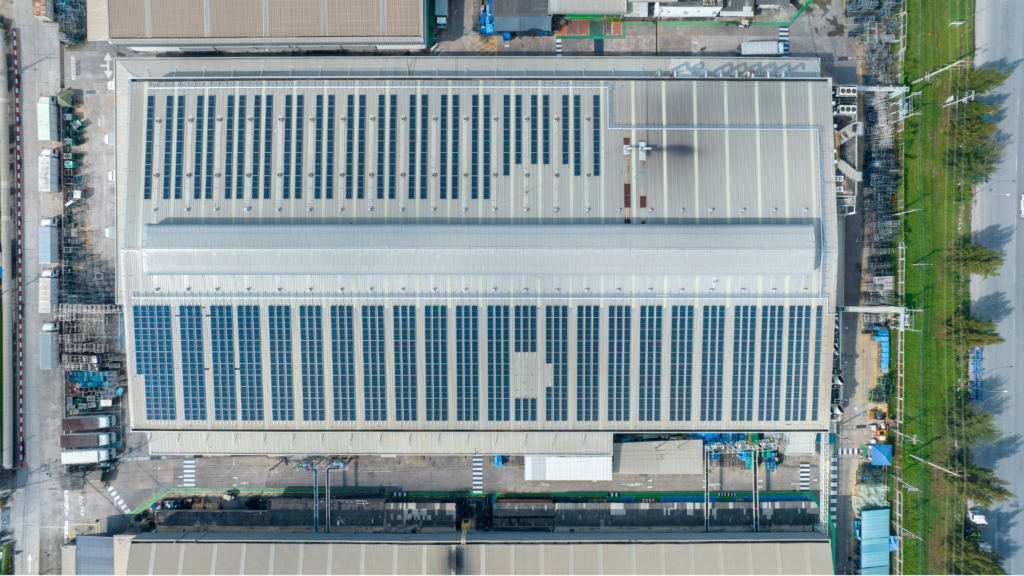
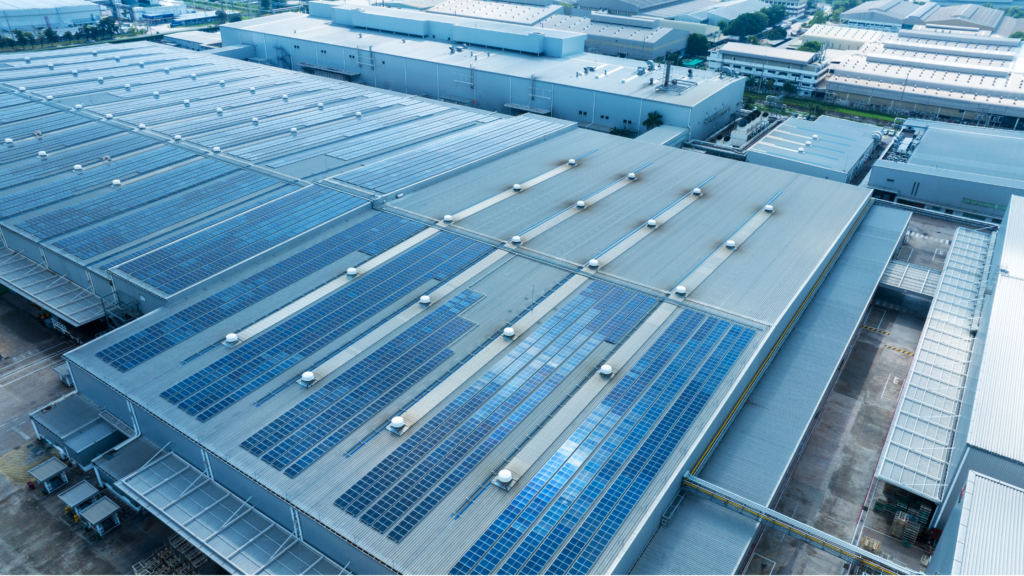
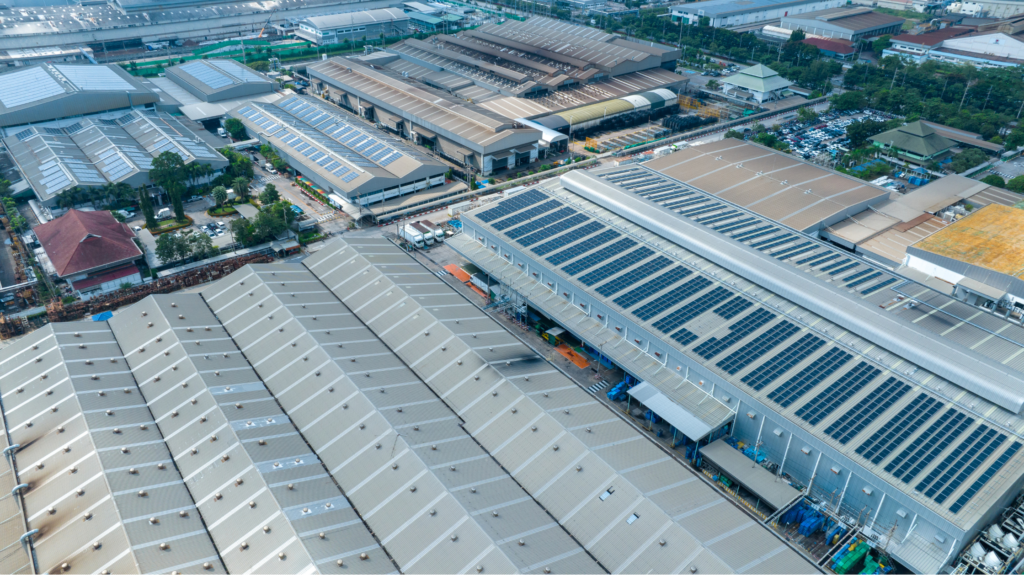
Warehouses and distribution centres are the unsung heroes of our economy. They keep stock flowing and support everything from e‑commerce to manufacturing. Yet these large buildings are also huge consumers of electricity. Rising energy costs and net‑zero targets are forcing businesses to look for new ways to cut their bills and carbon emissions. One of the most effective solutions is right above our heads: the vast, flat roofs of warehouses are ideal for commercial solar systems. By installing solar panels across unused roof space, warehouse owners can lock in low‑cost, renewable power for decades and take control of their energy future.

This article explains why solar makes sense for warehouses, how much a typical facility can save, and how Flux Solar Energy helps businesses adopt solar while upholding the high consumer‑protection standards of the Renewable Energy Consumer Code (RECC). We’ll also cover practical considerations like sizing, costs and payback times.
Why warehouses are perfect for solar
Large industrial roofs offer an exceptional opportunity for renewable generation. A 2022 research project by the UK Warehousing Association (UKWA) revealed that warehouses account for roughly one‑third of all commercial roof space and that only about 5 % currently host solar panels. If the sector embraced this opportunity, it could install at least 15 GW of solar capacity – effectively doubling the UK’s existing solar fleet – while reducing sector emissions by 2 million tonnes of CO₂ per year and delivering annual electricity savings of up to £3 billion . According to UKWA, the largest 20 % of warehouses alone offer 75 million square metres of usable roof space – equivalent to the footprint of 500,000 houses.
These statistics are staggering, but the logic is simple: warehouses have large, unshaded roofs, high daytime energy demand and often occupy land close to where electricity is consumed. Generating power onsite avoids transmission losses and shields businesses from volatile grid prices. The UK government’s Solar Taskforce echoes this sentiment, calling rooftop solar “one of the best investments available, offering dramatic savings on energy bills” and highlighting the ability to be paid for exporting surplus power.
How much can a warehouse save?
The precise savings from commercial solar depend on your roof size, energy consumption and system design, but credible research offers clear benchmarks:
- System density and roof coverage: The UKWA report assumes a maximum density of 200 W per square metre with 60 % roof coverage . Under these assumptions a 500 kW array requires roughly 2,500 m² of panels and about 4,200 m² of roof, while a 1 MW system needs around 5,000 m² of panels. These figures provide a more reliable way to estimate capacity than general rules of thumb.
- 40–80 % energy cost reduction: Analysis from the UKWA and other industry bodies indicates that rooftop solar can cut a warehouse’s annual electricity bill by 40–80 % . Because warehouses typically operate during daylight hours, most of the solar energy produced can be used on site, reducing purchases from the grid.
- Carbon savings: A 500 kW PV system suited to a 100,000 ft² warehouse can reduce carbon emissions by about 65 tonnes per year – the equivalent of driving a heavy goods vehicle 87,000 km. Over a 25‑year lifespan, that equates to more than 1,600 tonnes of avoided CO₂.
- Payback periods and returns: The UKWA modelled three system sizes. A 150 kWp installation typically pays back in around six years and yields an internal rate of return (IRR) of 15 %. A 400 kWp array pays back in about eight years with roughly 9 % IRR. Even large 1 MW systems recover costs in around twelve years with an IRR of 3 %. Smaller systems often offer higher returns because they displace a greater share of expensive retail electricity; larger systems may export more energy at lower SEG rates, reducing the overall IRR but still delivering significant lifetime savings.
These figures highlight that commercial solar is not just an environmental gesture – it is a sound financial decision. With zero‑rate VAT on solar panels and batteries until 2027 and electricity prices still high, there has never been a better time to invest.
Business benefits beyond the bottom line
Installing a solar array on your warehouse roof does more than reduce the electricity bill. It delivers wider benefits for your business and the environment:
- Energy security: Generating power onsite insulates your company from volatile wholesale prices and supply disruptions. Solar output is predictable during daylight hours, providing a stable source of energy.
- Decarbonisation: Rooftop solar helps meet corporate net‑zero commitments and demonstrates climate leadership. Businesses can report verifiable reductions in Scope 2 emissions.
- Increased property value: Solar panels transform a warehouse roof into a productive asset. Investors increasingly value buildings with lower operating costs and renewable energy supply, which can boost leasing appeal and capital value.
- Revenue opportunities: Under the Smart Export Guarantee (SEG), excess electricity can be sold back to the grid. Future virtual power plant programmes may also allow businesses to earn revenue by shifting or exporting energy during peak periods, as discussed in our recent blog on VPPs.
- Corporate image: Customers, staff and regulators appreciate companies that actively reduce their carbon footprint. Solar installations are a visible sign of sustainability.
Planning, sizing and costs
Getting commercial solar right requires careful planning. Here are the key considerations to ensure your system delivers maximum value:
- Energy demand: Examine your electricity bills to understand consumption patterns. Warehouses typically use around 30 kWh per m² per year. Installing a system sized to meet daytime demand maximises self‑consumption and savings.
- Roof assessment: A structural survey ensures the roof can support the weight of panels, mounting rails and ballast. Flat roofs often use ballasted mounting systems; pitched roofs need proper anchoring. Assess shading, orientation and access for maintenance.
- System size and density: Using high‑efficiency panels (around 200 W per square metre) with 60 % roof coverage can maximise output. At this density, each kilowatt of capacity requires about 8 m² of roof space; for example, a 400 kW system needs roughly 3,300 m² of roof space. Battery storage can capture excess energy during the day and supply it in the evening, increasing self‑consumption.
- Capital costs: UKWA estimates equipment and installation costs of £1,000–1,500 per kW, with inverters adding ~10 % and requiring replacement after around 11 years. Operations and maintenance (O&M) costs are modest, about £10 per kWp per year.
- Planning permission: Recent changes to permitted development rules have removed the previous 1 MW limit for rooftop solar, making it easier and faster to install larger systems. However, grid connection agreements and export limitations may still apply; early engagement with the distribution network operator (DNO) is essential.
By working with an experienced installer, you can navigate these factors and optimise your system design. Flux Solar Energy provides a detailed feasibility study that evaluates roof capacity, electrical usage and financial projections so you can make an informed decision.
High standards: Flux Solar Energy and RECC
Choosing a reputable installer is critical for commercial projects. Flux Solar Energy is proud to be a member of the Renewable Energy Consumer Code (RECC), a code of practice backed by the Chartered Trading Standards Institute (CTSI). RECC membership means we abide by strict consumer‑protection standards covering everything from pre‑contract information and performance estimates to installation quality and aftercare. As part of these standards, RECC members must insure deposits and workmanship warranties to protect consumers if an installer ceases trading.
Flux uses QANW’s Deposit & Workmanship Warranty Insurance for deposit and workmanship warranty cover. This scheme protects your deposit for 120 days if a contractor ceases trading and offers workmanship warranty protection starting at 2 years, with options to extend to 5 or 10 years. These policies meet RECC’s financial protection requirements and give our commercial clients peace of mind.
Being part of RECC also authorises us to display the RECC and CTSI logos, signalling to customers that we are committed to high standards. In addition, we are MCS‑certified and adhere to the latest BS 7671 wiring regulations, ensuring that every installation meets technical and safety requirements. Our membership means you can trust our quotes, contracts and workmanship.
Why partner with Flux Solar Energy
At Flux, we specialise in bespoke commercial solar solutions. Our engineers assess your warehouse’s roof structure, power usage and future growth plans to design a system that maximises generation and return on investment. We offer:
- Comprehensive design and installation: From site survey and structural analysis to DNO applications, installation and commissioning, we handle the entire project.
- High‑quality equipment: We use Tier 1 solar modules, efficient inverters and, where appropriate, battery storage to enhance self‑consumption and flexibility.
- Performance monitoring: Real‑time monitoring lets you track generation, savings and carbon reduction. We offer maintenance packages to ensure your system performs for decades.
- Transparent pricing: As RECC members, our quotations are clear and include all costs, without hidden extras. We advise on grants and incentives such as the Smart Export Guarantee and potential business tax advantages.
- Customer care: Our after‑sales support includes performance checks, warranty management and assistance with insurance documentation. Our deposit and warranty protection through QANW gives you confidence from day one.
Conclusion: unlock your roof’s potential
Commercial solar is more than a green badge – it’s a strategic investment that delivers long‑term savings, energy independence and environmental benefits. With the UK warehousing sector capable of doubling national solar capacity and a supportive policy environment, now is the time to act. A well‑designed solar array can cut your warehouse’s electricity bill by 40–80 % and pay back in as little as six years, all while slashing carbon emissions.
Flux Solar Energy combines technical expertise with the assurance of RECC membership. We’ll help you navigate feasibility studies, planning, installation and ongoing support, ensuring your investment performs for decades. Contact us today for a free consultation and discover how your warehouse roof can become a powerhouse for your business.
Conclusion: unlock your roof’s potential
Commercial solar is more than a green badge – it’s a strategic investment that delivers long‑term savings, energy independence and environmental benefits. With the UK warehousing sector capable of doubling national solar capacity and a supportive policy environment, now is the time to act. A well‑designed solar array can cut your warehouse’s electricity bill by 40–80 % and pay back in as little as six years, all while slashing carbon emissions.
Flux Solar Energy combines technical expertise with the assurance of RECC membership. We’ll help you navigate feasibility studies, planning, installation and ongoing support, ensuring your investment performs for decades. Contact us today for a free consultation and discover how your warehouse roof can become a powerhouse for your business.